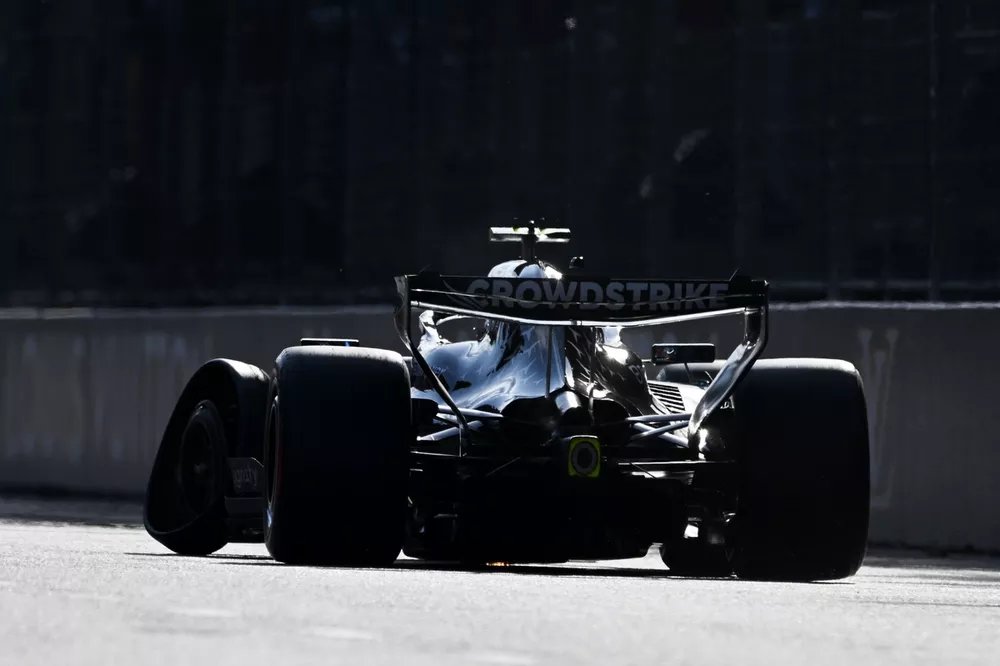
Verstappen Unveils the Real Cause of Red Bull's Engine Trouble in Baku

Max Verstappen has shed light on the unexpected engine problems encountered by Red Bull during the qualifying rounds in Baku, clarifying that the root cause was more complex than initially perceived.
Following his impressive performance in the final practice session, Verstappen had high hopes for the Baku race after recent car upgrades. However, a significant engine malfunction derailed his qualifying efforts. Initially, many suspected the issue was related to electrical deployment, a common concern with modern power units. Yet, Verstappen clarified that the core problem lay with the internal combustion engine (ICE). This primary defect led to a series of compounding issues, drastically affecting his car's performance. The internal combustion engine's failure caused a noticeable drop in top speed, and in a chain reaction, the battery also struggled to charge effectively. This created a 'super clipping' effect, where the system became confused, as the car tried to compensate for the power loss, leading to aggressive clipping and further performance degradation, particularly evident during long straights where the car spent more time at full throttle.
The engine trouble not only impacted the car's mechanics but also disrupted Verstappen's qualifying strategy. He was forced to abandon his second flying lap, which resulted in a loss of optimal tire temperature—a critical factor on the Baku circuit. This forced him to navigate the session with suboptimal conditions, culminating in a yellow flag on his final lap that cost him crucial tenths of a second. Despite these challenges, Verstappen indicated that Red Bull is investigating the issue, and an engine replacement is likely without incurring a grid penalty due to having an available spare. While he acknowledges a penalty might be unavoidable later in the season, he dismissed Baku as an ideal location for such a penalty, explaining that the nature of the track's long straight neutralizes any strategic advantage from an engine change due to uniform battery drain across all competitors. Reflecting on the lost opportunity, Verstappen believes that without the engine problems, he would have secured a much higher starting position, possibly even contending for the front row, demonstrating his inherent competitive spirit and drive for excellence.
In the high-stakes world of Formula 1, challenges like engine failures are inevitable. However, the true mark of a champion team and driver lies in their ability to diagnose issues accurately, adapt quickly, and maintain a positive outlook despite setbacks. Verstappen's transparency and Red Bull's proactive approach in addressing these mechanical hurdles exemplify resilience and a commitment to continuous improvement, inspiring confidence that even major obstacles can be overcome with strategic thinking and unwavering determination.