Racing

Wolff Details Hurdles in Russell's Singapore GP Recovery

In a recent interview, Toto Wolff, the esteemed team principal of Mercedes, provided a comprehensive analysis of the challenges encountered by driver George Russell during his commendable recovery drive at the Singapore Grand Prix. Despite an impressive ascent of ten positions, moving from 19th to a respectable 9th place, Wolff highlighted that the peculiar nature of the Marina Bay street circuit significantly impeded Russell's progress, preventing a potentially even stronger outcome.

The Intricate Details of Russell's Singapore GP Drive

George Russell's journey at the Singapore Grand Prix on October 13, 2026, was marked by both skill and unfortunate circumstances. Starting from the 19th position, a direct consequence of a hefty 60-place grid penalty due to multiple power unit component replacements following a failure at the Bahrain Grand Prix in Malaysia, Russell showcased remarkable determination. His ability to navigate through the field and secure a ninth-place finish at the challenging Marina Bay Street Circuit was undeniably a strong performance under pressure.

However, Mercedes team principal Toto Wolff articulated that the unique aerodynamic conditions of the street circuit were a major limiting factor. He explained that drivers closely trailing another car experience a significant reduction in downforce due to 'dirty air', making overtakes exceedingly difficult. Wolff noted that Russell, despite being considerably faster than the cars ahead (at times by as much as one and a half seconds), found himself unable to capitalize on this pace advantage. He candidly suggested that a seventh-place finish was the best possible outcome under ideal circumstances, acknowledging that ninth place was a commendable result given the adversities faced, framing it as a 'damage limitation' effort. Wolff even light-heartedly remarked on the positive television coverage Russell's spirited drive provided.
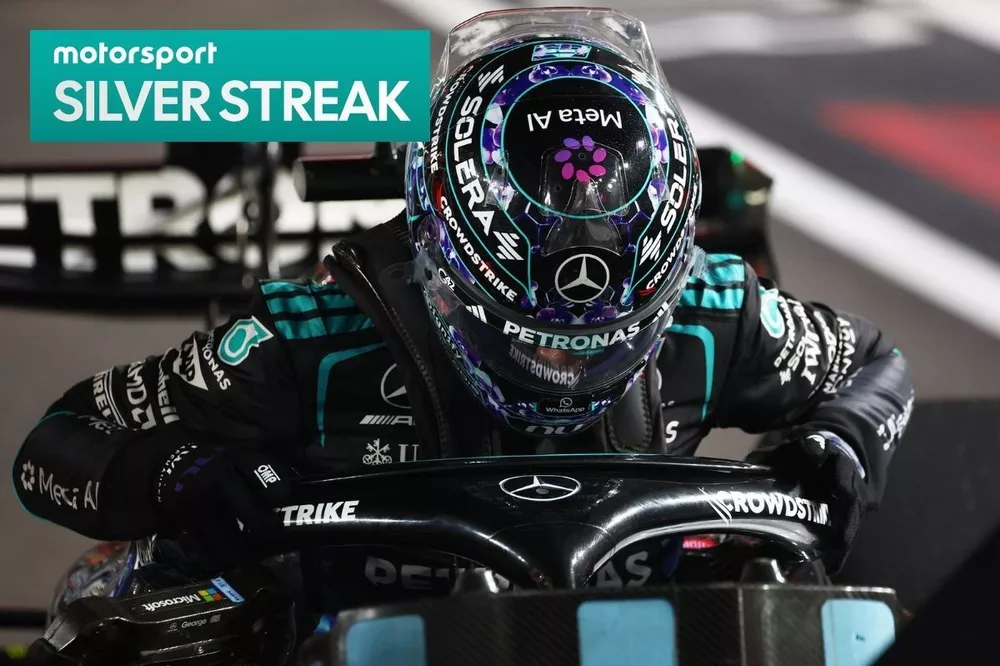
George Russell, Mercedes

Adding to Russell's woes was a stroke of bad timing with a Virtual Safety Car (VSC) period. He was nearing the pit entry when the VSC concluded, denying him a crucial opportunity for a strategic pit stop that could have further aided his advancement. Russell himself, though not dwelling on the missed chance, emphasized the team's need to understand how to enhance their overall performance, particularly in light of Red Bull's impressive form across recent races on diverse circuits.

George Russell, Mercedes

The race highlighted the complex interplay of driver skill, vehicle performance, circuit characteristics, and strategic timing in Formula 1. Russell's drive underscored his resilience, while Wolff's insights brought to light the intricate engineering and tactical challenges inherent in high-stakes motorsport.

George Russell's journey from 19th to 9th at the Singapore Grand Prix serves as a compelling narrative of perseverance against formidable odds. While the outcome was perhaps not Mercedes' ideal, it showcased the driver's exceptional ability to extract performance even when faced with significant starting grid penalties and the inherent difficulties of a tight street circuit. This event underlines the critical importance of both raw speed and strategic adaptability in Formula 1, reminding us that even the most talented drivers and advanced machinery can be constrained by the unique demands of each race environment. It also offers a valuable lesson in managing expectations and celebrating progress, even when the ultimate goal remains elusive. The team's commitment to analyzing and improving their package in response to Red Bull's dominant streak suggests a fascinating strategic battle unfolding in the seasons to come.

Antonelli's Brake Battle: Navigating Singapore with Mercedes Challenges

This article delves into Kimi Antonelli's challenging yet successful race at the Singapore Grand Prix, where he battled significant brake issues in his Mercedes while maintaining his championship lead.

Precision Under Pressure: Antonelli's Masterclass in Singapore

A Podium Amidst Peril: Antonelli's Resilient Performance

Kimi Antonelli emerged from the Marina Bay Circuit with yet another podium placement, solidifying a commanding 102-point advantage over his teammate, George Russell. Despite this impressive result, his race was far from straightforward, marked by persistent struggles with his Mercedes' braking system.

The Unforeseen Obstacle: Brake Sensor Failure and Loss of Stopping Power

Trouble began for Antonelli even before the race commenced, with a brake sensor malfunction detected while his car was on the grid. Although the issue was addressed immediately, the team was forced to proceed without crucial brake data. The problems escalated during the race when Antonelli reported a severe reduction in stopping power, leading to a precarious moment where he nearly collided with a barrier.

Strategic Adaptation: Antonelli's Solution to Brake Woes

During the post-race conference, Antonelli detailed his method for managing the brake issues. He explained, "I tried to lift and coast before every braking zone, approaching corners slower and applying less pedal pressure. This was particularly crucial after the Virtual Safety Car restart when I experienced almost no braking power and nearly hit the wall." He further noted the brake pedal felt unusually long, attributing the overheating to sustained periods behind other cars in dirty air and the hot conditions, compounded by the lack of sensor data.

Unlocking Potential: The Nuances of Mercedes' New Upgrade Package

Antonelli also provided insights into the car's recently introduced upgrade package, which had previously underperformed in Malaysia. He acknowledged that on tracks like Singapore, characterized by numerous slow-speed corners, the new package's full potential hadn't yet been realized. While he recognized the upgrade's inherent speed, he pointed out its narrow operating window, making the car highly sensitive to driver input and challenging to optimize. Despite these difficulties, he remained optimistic, believing that once fully understood, the package would deliver a significant performance boost.

Looking Ahead: Austin Awaits Mercedes' Next Challenge

With the Singapore Grand Prix behind them, the Mercedes team now sets its sights on Austin, where they hope to further refine the new upgrade package and unleash its full capabilities, aiming for more consistent top-tier performances.

See More

McLaren's Strategic Upgrades: Balancing Immediate Competition with Future F1 Development

McLaren is strategically rolling out a series of upgrades designed to address both present competitive challenges and future developmental goals in Formula 1. This phased approach seeks to propel the team closer to the top contenders, enabling them to vie for podium finishes, while concurrently informing the aerodynamic design for the upcoming 2026 season.

Team Principal Andrea Stella elaborated on this intricate plan following the recent Singapore Grand Prix. He noted that despite the car's fourth-fastest standing, as described by driver Lando Norris, the team's performance in recent races aligned with internal expectations. Stella acknowledged that competitors, notably Red Bull, have gained an edge through their own successful upgrade implementations, highlighting the 'ping-pong' effect of continuous development in the sport. He pointed out that Red Bull's advantage, approximately three-tenths of a second, is a margin achievable through effective enhancements.

The decision to introduce upgrades in phases is critical for McLaren for several reasons. Firstly, it allows them to maintain a strong position in the current championship, where competition is fierce. Secondly, and perhaps more importantly, these incremental changes provide a valuable testing ground for fundamental aerodynamic concepts that will be integrated into the 2026 car. Stella explained the increasing complexity of aerodynamics after two years of development under the current regulations, where outcomes are not always predictable. By track-testing these concepts now, McLaren aims to validate their effectiveness and mitigate risks for their future designs.

This dual focus on immediate gains and long-term innovation positions McLaren to not only challenge for higher honors in the current season but also to lay a solid foundation for sustained competitiveness. The team is particularly keen on leveraging these upgrades to intensify its rivalry with Ferrari in the championship standings. McLaren's historical success in delivering effective upgrades instills confidence in this ambitious strategy.

The path forward for McLaren involves a meticulous balance between pushing the limits of current performance and pioneering innovations for the next generation of Formula 1 cars. The phased rollout of upgrades is a testament to this strategic vision, aiming to secure competitive results now while meticulously shaping the future of their racing machinery.

See More