Racing

Red Bull Addresses Verstappen's Persistent Car Degradation Issues

Red Bull Racing is grappling with a persistent car degradation issue affecting Max Verstappen's Formula 1 vehicle, a problem that team principal Laurent Mekies has openly addressed. This recurring challenge, primarily impacting the rear axle, has been a source of frustration for Verstappen over multiple seasons. While the team has gained some understanding and made minor advancements, a complete rectification of the issue is anticipated only with the significant design overhauls planned for the 2027 season.

Details of the Lingering Car Performance Challenge

Throughout the current Formula 1 season, Max Verstappen, the esteemed four-time world champion, has frequently voiced concerns regarding the diminishing performance of his Red Bull car during racing sessions. He famously described the RB22 as feeling like it was "made of paper" during qualifying at Monza due to this degradation. Verstappen’s complaints, which he states have been ongoing internally for years, highlight a fundamental and complex challenge for the Milton Keynes-based team.

When questioned about the matter, Laurent Mekies, the Red Bull team principal, chose not to disclose the specific technical details or the proposed solutions. However, he corroborated Verstappen’s observations, acknowledging that “an element of car performance degradation” indeed manifests during sessions and races. Mekies emphasized that this is not a new problem and that the team has been actively striving to resolve it through various approaches.

He further elaborated that the issue is intricate, preventing a quick fix. Despite its complexity, there is a collective and constructive effort within the team to make gradual improvements. Mekies indicated that valuable lessons were learned from Verstappen’s frustrations during the Monza qualifying. These insights were subsequently applied during F1’s recent visit to Madrid, where the problem either did not surface or was significantly mitigated.

Mekies optimistically noted, “We had a couple of positive steps in that regard this weekend.” He added that while these steps would not provide a complete solution, they signified progress in the team’s understanding. He expressed confidence that Red Bull is on the right track, though a swift resolution is unlikely, with the problem potentially extending into the next year. This implies that some necessary changes are too substantial for the current season’s car and will require significant modifications to the chassis and design for the 2027 regulations.

The constraints imposed by the budget cap and the team’s early shift in focus to the 2027 car development mean that extensive fixes for the RB22 are not feasible this year. Consequently, Mekies admitted that the degradation issue might persist in the remaining races of the season. He reiterated the severity of the problem, stating, “It’s true that there are some aspects of the car performance that sometimes don’t stay at the optimum level. And that’s serious lap time.”

For Verstappen, this means that his aspirations for winning a Grand Prix this season face considerable challenges. If he fails to secure a victory, it would mark the first year since 2015 – when he drove for Toro Rosso – without a race win. Since his promotion to Red Bull in May 2016, Verstappen has consistently claimed at least one Grand Prix victory each year.
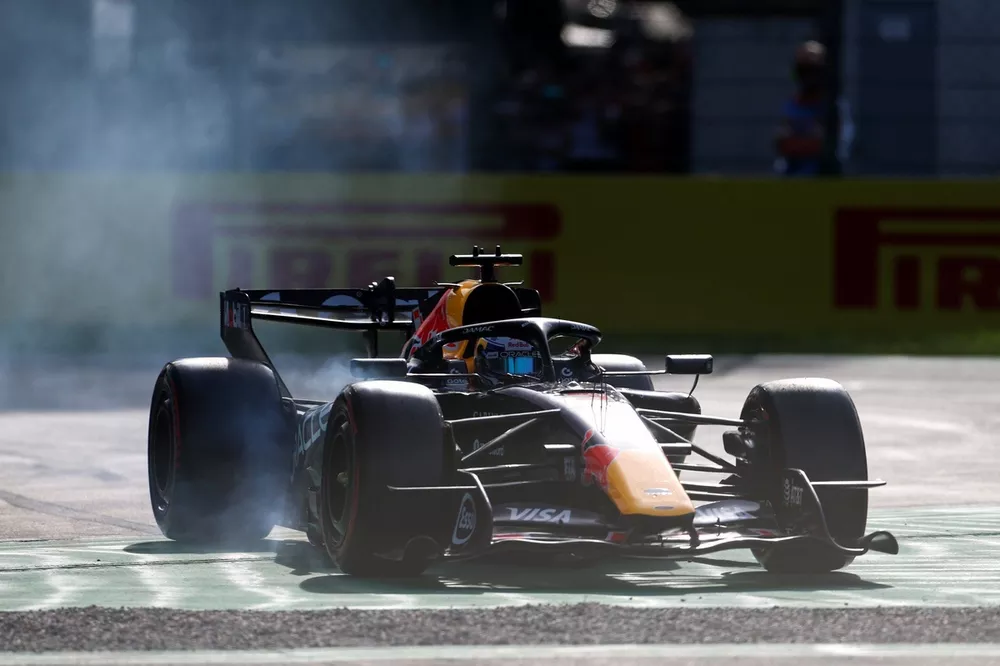
Max Verstappen, Red Bull Racing

Verstappen said at Monza that the Red Bull car is “made of paper” after he suffered from “car degradation” during qualifying

If Verstappen does not win a Grand Prix this season, it will be the first year since 2015 without a race win

The ongoing struggle with car degradation highlights the intricate balance between performance and reliability in Formula 1. Red Bull’s transparent acknowledgment of this challenge, coupled with their long-term strategic planning, underscores the relentless pursuit of perfection in top-tier motorsport. While immediate solutions remain elusive, the commitment to resolving these issues for future seasons demonstrates a methodical and determined approach to maintaining their competitive edge. It also reminds us that even the most dominant teams face complex engineering hurdles that require patience and sustained effort to overcome. The ultimate goal is to provide Max Verstappen with a car that performs optimally from start to finish, ensuring he can consistently contend for victories.

Cadillac's F1 Championship Hopes Questioned by Former Alpine Boss

Former Alpine Formula 1 team principal, Otmar Szafnauer, has voiced significant reservations about Cadillac's current organizational setup, believing it poses a substantial obstacle to their aspirations of clinching a world championship title. Cadillac, having joined the F1 grid in 2026, operates with a unique dual base system: a European facility in Silverstone for hands-on development and critical design and simulation activities centralized in Indianapolis and South Carolina in the United States. Szafnauer suggests this geographical and operational split fundamentally undermines the team's efficiency and competitive edge, especially when vying against established powerhouses in the sport.

During a discussion on the 'High Performance Racing' podcast with broadcaster Jake Humphrey, Szafnauer highlighted the potential disadvantages of Cadillac's dispersed infrastructure. He recounted a recent conversation with Pat Symonds, Cadillac's executive engineering consultant, where he directly questioned the efficacy of such a fragmented approach. Szafnauer drew a stark comparison: even if Cadillac matches industry leaders like Mercedes in driver talent, power unit performance, and understanding of vehicle dynamics, aerodynamics, and tire management, their divided operational model would still place them at a disadvantage.

Szafnauer emphasized that the pursuit of a world championship demands an integrated and streamlined operation, where every component works in perfect synergy. He argued that while a split structure might fulfill other objectives, such as establishing an American presence in Formula 1, it directly conflicts with the ultimate goal of championship victory. This critique underscores the intricate balance between national identity and global competitive imperatives in elite motorsport.

Since its debut on the F1 circuit, Cadillac has grappled with the challenges of adapting to the demanding environment of Formula 1, including overcoming initial reliability issues. Despite their efforts, the team currently languishes at the bottom of the constructors' standings, yet to score any points. Szafnauer's comments provide a critical perspective on the strategic choices made by the new entrant, suggesting that their current trajectory may be hampered by a fundamental structural flaw rather than a lack of talent or resources.

The seasoned team principal's insights prompt a deeper consideration of the strategies new teams employ when entering a highly competitive arena like Formula 1. His analysis points to the crucial role of operational cohesion and geographical proximity in fostering the seamless collaboration necessary for championship contention. The ongoing performance of Cadillac will serve as a practical test of whether a 'suboptimal' split structure can indeed be overcome to achieve top-tier success in the demanding world of F1 racing.

See More

KTM's Post-Victory Humility: Learning from Past Errors

This article explores the critical juncture for KTM in MotoGP, advocating for humility and strategic re-evaluation after a significant victory. It delves into the historical context of the team's challenges and changes in leadership, emphasizing the importance of learning from past errors to ensure future stability and success.

Embracing Humility: The Path Forward for KTM in MotoGP

KTM's Recent Triumph and Its Historical Context in MotoGP

KTM recently celebrated a significant MotoGP victory, marking a pivotal moment for the team. This win comes after a considerable dry spell, with the last triumph dating back to Miguel Oliveira's success in the 2022 Thai Grand Prix, a race heavily influenced by weather conditions. The interim period saw remarkable developments, including Pedro Acosta's impressive ascent through Moto2 to his MotoGP debut, ultimately culminating in this recent victory. Meanwhile, Oliveira has transitioned to WorldSBK, and KTM itself navigated through a period of financial instability and restructuring.

The Emotional Aftermath and the Imperative of Self-Reflection

As Acosta crossed the finish line at the Red Bull Ring, a wave of emotion swept through the KTM garage. Gottfried Neumeister, the current CEO, and Pit Beirer, the motorsport director, were seen in a heartfelt embrace, signifying the release of immense pressure that had accumulated over the past eighteen months. This cathartic moment, however, also serves as a crucial reminder for KTM to reflect on its past shortcomings and prevent a return to previous periods of struggle and underperformance.

Examining KTM's Historical Challenges and the Pitfalls of Arrogance

Historically, KTM has faced criticisms regarding its operational philosophy, with some former employees describing the team's approach as 'arrogant.' This characterization often stemmed from a perceived lack of patience and a clear, consistent strategic direction in MotoGP. A notable example was former CEO Stefan Pierer's steadfast commitment to the trellis frame, a design philosophy that engineers eventually had to abandon in favor of carbon fiber to enhance the RC16's competitiveness.

Leadership Instability and Its Impact on Team Cohesion

The period leading up to the financial difficulties in late 2024 was marked by considerable turbulence within KTM's management. High-profile personnel changes, such as the short tenure of team manager Francesco Guidotti and the departure of engineer Fabiano Sterlacchini to Aprilia, underscore a challenging environment. This instability, coupled with an excess of contracted riders compared to available bikes, created confusion and hindered the team's progress, illustrating the detrimental effects of an unsettled organizational structure.

The Departure of Pedro Acosta and Future Rider Dynamics

Perhaps the most significant setback during this tumultuous phase is the impending departure of Pedro Acosta, who will join Ducati in 2027. Neumeister's candid admission about Acosta's desire to challenge Marc Marquez on equal terms highlights the allure of external opportunities for top talent. KTM is attempting to mitigate this loss with the arrival of Alex Marquez and Fabio Di Giannantonio, bringing in experienced technical personnel to support them. However, the future reduction in support for the Tech 3 team signals a strategic shift that could impact its performance and independence.

The Path to Sustained Success: Embracing Humility and Strategic Foresight

As KTM savors its recent victory, it is crucial for the team to internalize the lessons from its past struggles. The new leadership, particularly Neumeister, appears to adopt a more humble and pragmatic approach compared to his predecessor. To avoid repeating past mistakes, particularly those rooted in overconfidence, KTM must embrace a continuous process of self-assessment and strategic adaptation. A balanced perspective, grounded in humility and a clear vision, will be essential for navigating the highly competitive landscape of MotoGP and building a foundation for enduring success.

See More