Racing

Ott Tanak Dominates Overmountain Rally Tennessee in Triumphant Return

Rally ace Ott Tanak, the esteemed 2019 World Rally Champion, has made a spectacular comeback to the rallying scene, claiming a dominant victory at the Overmountain Rally Tennessee. This event was not only his debut in the American Rally Association National Championship but also a pivotal moment for Toyota's future in the World Rally Championship.

Tanak's Resounding Return and Toyota's Strategic Play

On September 21, 2026, in the rugged terrain of Tennessee, Ott Tanak, alongside his co-driver Martin Jarveoja, steered a formidable factory-backed Toyota GR Corolla Rally RC2 to victory. This marked his first competitive appearance since the World Rally Championship finale in Saudi Arabia last year, and his first win for Toyota since the 2019 Rally Catalunya. The Estonian driver's performance was nothing short of exceptional, as he clinched the top spot in the 13-stage gravel rally with a commanding lead of 1 minute and 4.3 seconds over Canada's four-time ARA champion, Brandon Semenuk, who was co-driven by Keaton Williams.

Tanak's participation in the Overmountain Rally Tennessee extends beyond personal glory. Having transitioned from Hyundai's WRC team at the close of 2025, he has taken on a critical test and development role with Toyota. His expertise is being leveraged for the creation of Toyota's all-new 2027 WRC car, a project that anticipates significant technical regulation changes next year. This rally served as a vital data collection exercise, particularly as the region of Tennessee actively bids to host a World Rally Championship event in 2027. Earlier in July, Tanak also non-competitively piloted a 0-B car at Rally di Roma Capitale in Italy, gathering further insights for the event's potential inclusion in the WRC calendar.

Throughout the Tennessee stages, Tanak demonstrated his prowess by setting the fastest times in 10 out of the 13 tests. Despite narrowly losing the opening stage to Skoda Fabia RS Rally2 driver Semenuk by a mere 0.1 seconds, Tanak quickly asserted his dominance. He secured three consecutive stage wins by the end of Friday, establishing a comfortable 30.1-second lead over Subaru's Conner Martell. His relentless drive continued into Saturday, where he added seven more stage victories, solidifying his unassailable position. Ultimately, he crossed the finish line ahead of Semenuk, with Seth Quintero, driving a sister Toyota GR Corolla RC2, securing third place, 1 minute and 50 seconds clear of Lia Block.

While the exact timing of Tanak's next competitive outing remains unconfirmed, his pivotal role in refining Toyota's 2027 WRC contender is expected to continue throughout the current year, underscoring his enduring influence on the sport's future.

Tanak's decisive victory at the Overmountain Rally Tennessee is a testament to his unwavering skill and adaptability. His continued involvement in developing next-generation rally cars for Toyota highlights the crucial interplay between competitive driving and technological advancement in motorsport. This triumph not only adds another feather to his cap but also significantly contributes to Toyota's strategic preparations for the evolving landscape of the World Rally Championship, potentially paving the way for rallying's return to American soil. It underscores that even a seasoned champion can find new purpose and continue to push boundaries, blending past glories with future innovations.
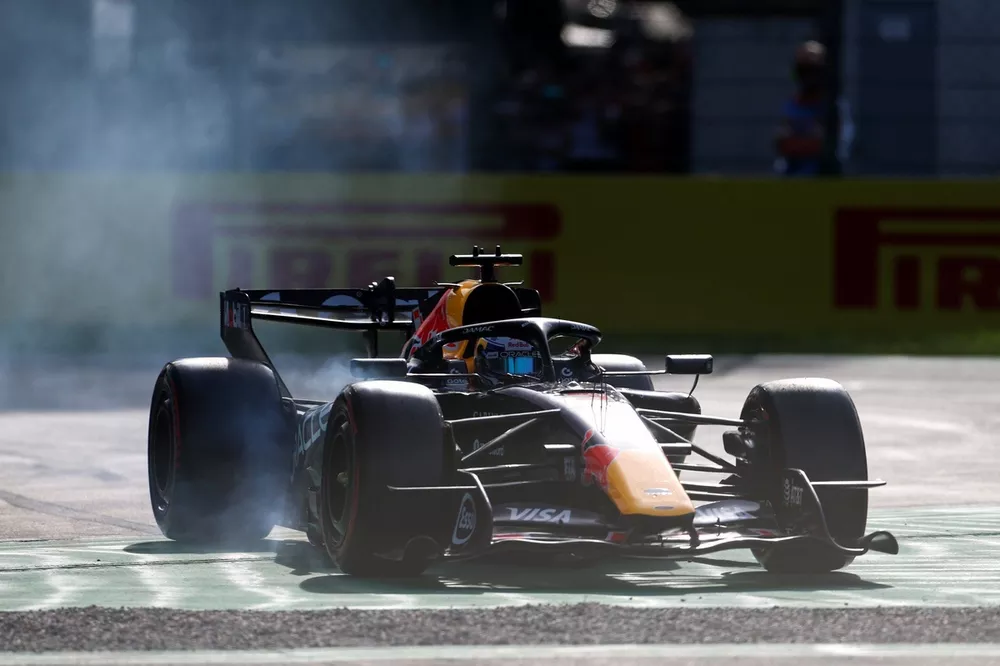
Red Bull Addresses Verstappen's Persistent Car Degradation Issues

Red Bull Racing is grappling with a persistent car degradation issue affecting Max Verstappen's Formula 1 vehicle, a problem that team principal Laurent Mekies has openly addressed. This recurring challenge, primarily impacting the rear axle, has been a source of frustration for Verstappen over multiple seasons. While the team has gained some understanding and made minor advancements, a complete rectification of the issue is anticipated only with the significant design overhauls planned for the 2027 season.

Details of the Lingering Car Performance Challenge

Throughout the current Formula 1 season, Max Verstappen, the esteemed four-time world champion, has frequently voiced concerns regarding the diminishing performance of his Red Bull car during racing sessions. He famously described the RB22 as feeling like it was "made of paper" during qualifying at Monza due to this degradation. Verstappen’s complaints, which he states have been ongoing internally for years, highlight a fundamental and complex challenge for the Milton Keynes-based team.

When questioned about the matter, Laurent Mekies, the Red Bull team principal, chose not to disclose the specific technical details or the proposed solutions. However, he corroborated Verstappen’s observations, acknowledging that “an element of car performance degradation” indeed manifests during sessions and races. Mekies emphasized that this is not a new problem and that the team has been actively striving to resolve it through various approaches.

He further elaborated that the issue is intricate, preventing a quick fix. Despite its complexity, there is a collective and constructive effort within the team to make gradual improvements. Mekies indicated that valuable lessons were learned from Verstappen’s frustrations during the Monza qualifying. These insights were subsequently applied during F1’s recent visit to Madrid, where the problem either did not surface or was significantly mitigated.

Mekies optimistically noted, “We had a couple of positive steps in that regard this weekend.” He added that while these steps would not provide a complete solution, they signified progress in the team’s understanding. He expressed confidence that Red Bull is on the right track, though a swift resolution is unlikely, with the problem potentially extending into the next year. This implies that some necessary changes are too substantial for the current season’s car and will require significant modifications to the chassis and design for the 2027 regulations.

The constraints imposed by the budget cap and the team’s early shift in focus to the 2027 car development mean that extensive fixes for the RB22 are not feasible this year. Consequently, Mekies admitted that the degradation issue might persist in the remaining races of the season. He reiterated the severity of the problem, stating, “It’s true that there are some aspects of the car performance that sometimes don’t stay at the optimum level. And that’s serious lap time.”

For Verstappen, this means that his aspirations for winning a Grand Prix this season face considerable challenges. If he fails to secure a victory, it would mark the first year since 2015 – when he drove for Toro Rosso – without a race win. Since his promotion to Red Bull in May 2016, Verstappen has consistently claimed at least one Grand Prix victory each year.

Max Verstappen, Red Bull Racing

Verstappen said at Monza that the Red Bull car is “made of paper” after he suffered from “car degradation” during qualifying

If Verstappen does not win a Grand Prix this season, it will be the first year since 2015 without a race win

The ongoing struggle with car degradation highlights the intricate balance between performance and reliability in Formula 1. Red Bull’s transparent acknowledgment of this challenge, coupled with their long-term strategic planning, underscores the relentless pursuit of perfection in top-tier motorsport. While immediate solutions remain elusive, the commitment to resolving these issues for future seasons demonstrates a methodical and determined approach to maintaining their competitive edge. It also reminds us that even the most dominant teams face complex engineering hurdles that require patience and sustained effort to overcome. The ultimate goal is to provide Max Verstappen with a car that performs optimally from start to finish, ensuring he can consistently contend for victories.

See More

Cadillac's F1 Championship Hopes Questioned by Former Alpine Boss

Former Alpine Formula 1 team principal, Otmar Szafnauer, has voiced significant reservations about Cadillac's current organizational setup, believing it poses a substantial obstacle to their aspirations of clinching a world championship title. Cadillac, having joined the F1 grid in 2026, operates with a unique dual base system: a European facility in Silverstone for hands-on development and critical design and simulation activities centralized in Indianapolis and South Carolina in the United States. Szafnauer suggests this geographical and operational split fundamentally undermines the team's efficiency and competitive edge, especially when vying against established powerhouses in the sport.

During a discussion on the 'High Performance Racing' podcast with broadcaster Jake Humphrey, Szafnauer highlighted the potential disadvantages of Cadillac's dispersed infrastructure. He recounted a recent conversation with Pat Symonds, Cadillac's executive engineering consultant, where he directly questioned the efficacy of such a fragmented approach. Szafnauer drew a stark comparison: even if Cadillac matches industry leaders like Mercedes in driver talent, power unit performance, and understanding of vehicle dynamics, aerodynamics, and tire management, their divided operational model would still place them at a disadvantage.

Szafnauer emphasized that the pursuit of a world championship demands an integrated and streamlined operation, where every component works in perfect synergy. He argued that while a split structure might fulfill other objectives, such as establishing an American presence in Formula 1, it directly conflicts with the ultimate goal of championship victory. This critique underscores the intricate balance between national identity and global competitive imperatives in elite motorsport.

Since its debut on the F1 circuit, Cadillac has grappled with the challenges of adapting to the demanding environment of Formula 1, including overcoming initial reliability issues. Despite their efforts, the team currently languishes at the bottom of the constructors' standings, yet to score any points. Szafnauer's comments provide a critical perspective on the strategic choices made by the new entrant, suggesting that their current trajectory may be hampered by a fundamental structural flaw rather than a lack of talent or resources.

The seasoned team principal's insights prompt a deeper consideration of the strategies new teams employ when entering a highly competitive arena like Formula 1. His analysis points to the crucial role of operational cohesion and geographical proximity in fostering the seamless collaboration necessary for championship contention. The ongoing performance of Cadillac will serve as a practical test of whether a 'suboptimal' split structure can indeed be overcome to achieve top-tier success in the demanding world of F1 racing.

See More