Racing

Kimi Antonelli Shares Federer's Wisdom for F1 Title Aspirations

Kimi Antonelli, currently leading the Formula 1 drivers' championship, recently shared the profound advice he received from legendary tennis player Roger Federer during a meeting at Wimbledon.

The encounter took place shortly after Antonelli's challenging performance at the British Grand Prix, where he finished 15th due to a dislodged wheel cover and a track limits penalty. Despite the setback, the young Italian driver was seen enjoying the prestigious Royal Box at Wimbledon, engaging in conversation with the 20-time Grand Slam champion.

During a press conference held before the Belgian Grand Prix at Spa-Francorchamps, Antonelli elaborated on his conversation with Federer. He expressed his growing interest in tennis, influenced by his acquaintance with Jannik Sinner, and described the experience of meeting Federer as 'great' and 'really cool'.

Federer's advice to Antonelli focused on navigating the intense pressure that comes with elite sports. Their discussion also encompassed various aspects of tennis and life in general. Antonelli highlighted Federer's humble and open demeanor, acknowledging him as not only an incredible athlete but also an exceptional individual.

The core of Federer's guidance revolved around maintaining focus on one race at a time, concentrating solely on controllable elements, and effectively managing emotions to prevent errors. These insights, according to Antonelli, were invaluable in helping him prepare for the rigorous demands of the Formula 1 season.

As Antonelli heads into the Belgian Grand Prix, he holds a 25-point lead over his Mercedes teammate, George Russell, demonstrating his strong position in the championship standings. The advice from a seasoned champion like Federer is expected to further bolster his mental fortitude as he aims for the title.
Haas's Development Struggle: Outpaced by F1 Rivals?

Initially performing strongly this season, the Haas F1 team has faced recent challenges, prompting discussions about their developmental progress compared to competitors.

The Haas Conundrum: Keeping Pace in the F1 Development Race

Early Season Promise Fades for Haas F1

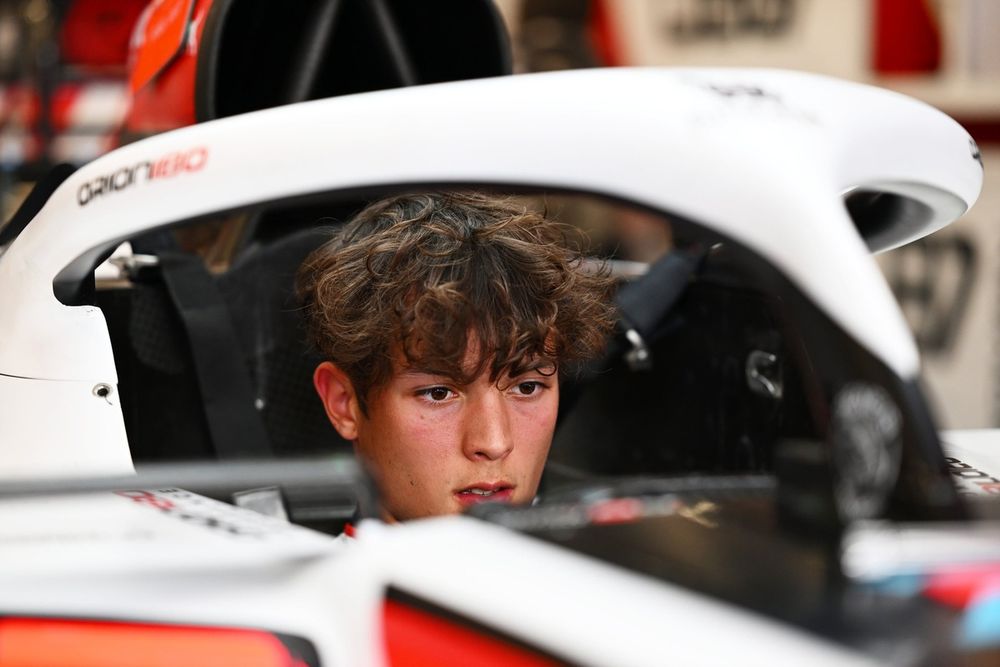
The current Formula 1 season began with a promising outlook for the Haas team. Young talent Oliver Bearman delivered impressive results, securing a seventh-place finish in Melbourne and a fifth in China, propelling Haas to an unexpected fourth position in the constructors' standings, even ahead of Red Bull.

The Struggle for Sustained Performance

However, the initial momentum has since waned significantly. Following the April break, Haas has only managed to accumulate a mere three points, a tally surpassed by all but the struggling Cadillac and Aston Martin outfits. What was once a consistent presence in Q3 has now become a team frequently battling to escape Q1.

Bearman's Perspective: Lagging Development and Underperforming Upgrades

Oliver Bearman, reflecting on the team's performance, identifies two primary factors contributing to this downturn. He suggests that, unlike the previous year where regulations were mature and small, timely upgrades were effective, the current environment sees rivals introducing substantial car overhauls almost weekly. Bearman acknowledges that Haas simply cannot match this rapid pace of development. Furthermore, he expresses disappointment that the upgrades Haas has introduced have not yielded the expected improvements.

Oliver Bearman, Haas F1 Team

Komatsu's Counterpoint: Inherent Car Characteristics and Delivered Upgrades

Team Principal Ayao Komatsu, while conceding that Haas has been outdeveloped by some rivals, particularly praising Racing Bulls for their impressive floor upgrades, offers a nuanced perspective on the effectiveness of their own updates. He disagrees with the notion that Haas's upgrades have failed, stating that parts introduced in Montreal have, in fact, delivered the expected downforce. Komatsu emphasizes that the challenge lies in the car's intrinsic handling characteristics, which were masked by favorable circuit conditions in the early races but became apparent on less forgiving tracks like Miami. He also points to an unexpected five-week break due to geopolitical events, which delayed their understanding of these issues.

Arvid Lindblad, Racing Bulls, Esteban Ocon, Haas F1 Team

Ayao Komatsu, Haas F1 Team

Looking Ahead: Future Upgrades and Enhanced Understanding

Despite the current difficulties, Haas is introducing a new front wing for the upcoming race weekends, which Bearman anticipates will provide a slight improvement. The team is also eagerly awaiting a more significant upgrade package after the summer break. However, Bearman stresses the importance of thoroughly understanding the current car's behavior before implementing major changes to maximize the effectiveness of future developments. Komatsu reiterates his goal of improving the team's processes to identify and address car characteristics earlier in the seaso

See More

Hadjar Faces Belgian GP Grid Penalty for Engine Change

This article discusses the grid penalties imposed on Formula 1 drivers Isack Hadjar and Lando Norris for exceeding their power unit component allowances at the Belgian Grand Prix. It also touches upon Max Verstappen's similar engine change, which did not result in a penalty, and the broader implications for team strategies and reliability.

Race Weekend Drama: Penalties and Strategic Moves at Spa

Hadjar's Grid Setback: Exceeding Power Unit Limits

Red Bull Racing's driver, Isack Hadjar, is poised to commence the upcoming Formula 1 Belgian Grand Prix from the rear of the starting grid. This sanction stems from his team's decision to equip his vehicle with a fifth power unit, which includes a new internal combustion engine, turbocharger, and exhaust system. This move surpasses the stipulated seasonal limit of four components, leading to a significant grid drop that effectively places him at the very back for Sunday's race, in 22nd position.

Driver's Outlook on the Challenge Ahead

Isack Hadjar had anticipated this outcome, remarking on Thursday that his impressive run of five consecutive top-six finishes since the Canadian Grand Prix in May would likely be interrupted. He expressed a realistic view of the challenge, stating that securing another top-six finish would be difficult given his starting position. However, Hadjar remains optimistic about his race pace, particularly at a circuit like Spa-Francorchamps, known for its overtaking opportunities, and looks forward to an engaging race on Sunday.

Verstappen and Norris: Varying Fortunes with Component Changes

In contrast to Hadjar, four-time world champion Max Verstappen also received new V6 engine, turbo, and exhaust components but will not face a grid penalty, having only utilized two of each prior to this change. Meanwhile, Lando Norris of McLaren will also face a grid penalty, moving to the back of the grid due to the installation of his fifth battery of the season, exceeding his allotted four. Both Norris and Oscar Piastri are adopting new Mercedes HPP power electronics units, aimed at bolstering reliability, with Norris incurring a 10-place grid drop. Additionally, these McLaren drivers now have access to Mercedes' latest combustion engine, following its deployment by other Mercedes-powered teams like Williams and Alpine the previous weekend.

Stroll's Penalty and Team Performance Factors

Further down the grid, Aston Martin's Lance Stroll is also subject to a grid penalty for integrating a new Honda MGU-K electric motor, resulting in a theoretical 10-place demotion. Considering his team's recent performance struggles, Stroll was already expected to start towards the rear, likely lining up in 21st position alongside Hadjar. These various component changes and subsequent penalties underscore the intricate balance between performance and reliability in Formula 1, as teams navigate the strict regulations governing power unit usage throughout the season.

See More